To Trust or Not to Trust AI-Generated Content
AI can generate your training content in minutes. Whether employees trust it enough to actually learn from it is the harder question.
At BrainStorm, we produce adaptive learning content built for AI adoption. That includes thousands of assets a year, many of them short videos. The first principle of design is always who it's for. So when the question of learners’ AI tolerance came up, we didn't guess. We asked.
Our Learning Experience team ran a study with more than 120 real learners. To ensure a fair comparison, participants were randomly assigned to different versions of learning formats in varying sequences so that content order wouldn't influence the results. Today, we're sharing our first key finding.
We tested three common training formats (a PDF guide, an animated video, and an instructor‑led video) in three ways: fully human‑made, fully AI‑generated, and AI‑drafted with human editing. Learners on the BrainStorm platform reviewed everything and rated it on Trust (credibility and accuracy), Engagement (interest in continuing learning and recommending it to others) and Clarity (ease of understanding and overall quality). See the full definitions below.
The short version
For this article, we’ll divide the results and interpretation into several topics across a four‑article series. The first will examine how ready or finished the content felt to learners, which depends on the format.
- PDF guides: Humans trust AI-authored PDF guides as much as fully human-authored ones.
- Animated video: the most forgiving format we tested. All three versions performed similarly, and a human polish pass added no measurable value.
- Instructor-led video: the one place where editing is non-negotiable. A human‑written script made the difference between content that landed and content that didn’t.
Which content formats matter most to learners?
Across all three formats, we measured how well learners understood and remembered the content. Each version taught just as effectively, regardless of who or what produced it.
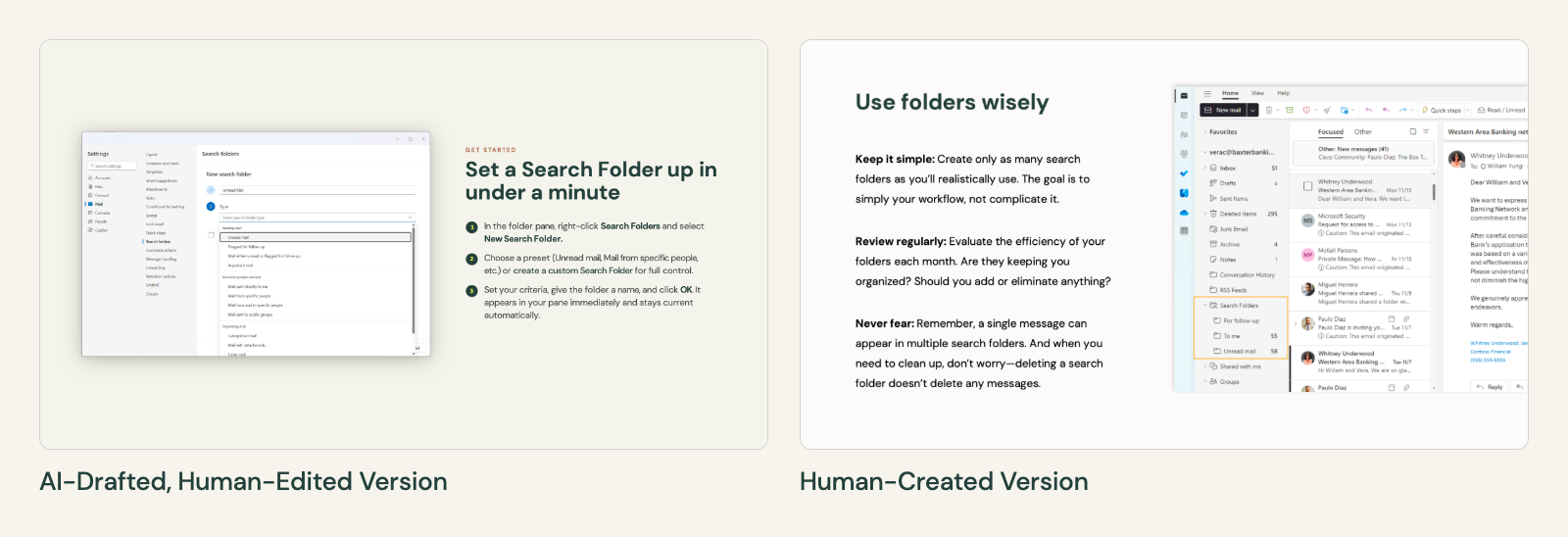
PDF guides
All three production methods performed similarly across every measured metric. Between 54% and 59% of learners said the guide was ready to use as written, regardless of who created it.
For clarity, human polish narrows the gap to the Human method, suggesting the shift isn’t about “skipping humans” but about spending human time on clarity and fact‑checking rather than rewriting from scratch.
Animated video
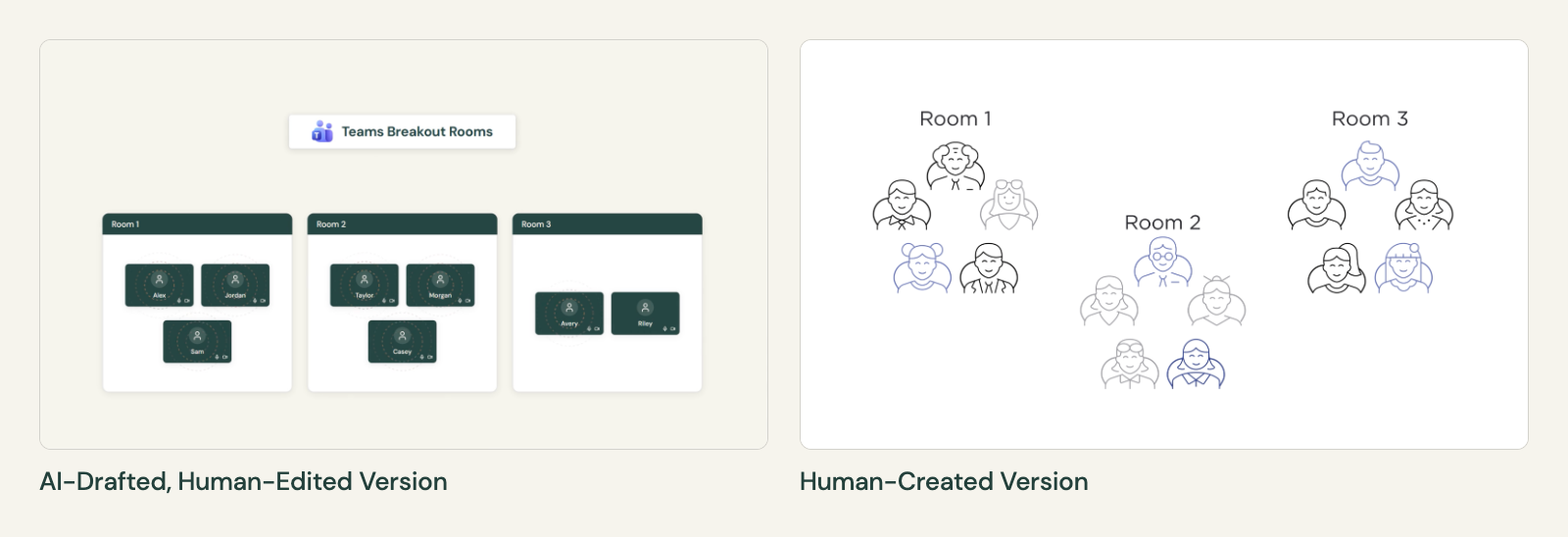
The production method mattered least for this format. Trust, engagement, and clarity remained consistent across the three versions, and learners were far more likely to deem the content ready to use, 75% to 79%, about 20 points higher than the PDF guides.
Requests to fix visual design and readability nearly vanished. The format did the heavy lifting: motion, visuals, and narration smoothed over production differences, making the content look polished no matter who created it.
Instructor-led video
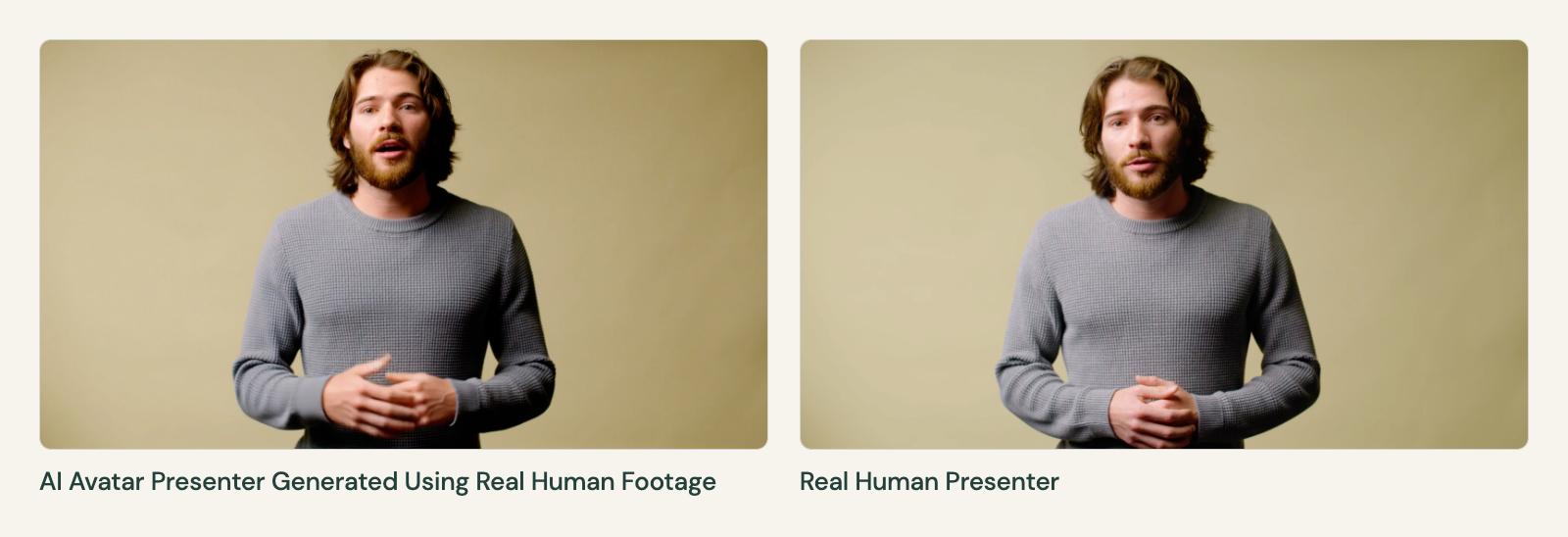
Here, the opposite is true: a fully AI‑generated script scored noticeably lower on trust and clarity than the same AI presenter paired with a human‑written script. With the human‑written script, the AI avatar was statistically indistinguishable from the Real Human Avatar. The presenter mattered less than the words the presenter was given to say.
 Why understanding learner sentiment matters beyond content production
This study exists because research on how AI should be used, its impact on learner experience, and learners’ concerns about AI in workplace training remains limited. If you’re building or purchasing AI‑assisted training at scale, the format‑by‑format differences presented here offer a starting point for your review process.
Producing AI content faster was never the goal; the goal was getting people to trust it enough to change how they work. That gap, between AI access and real adoption, is exactly where a human touch still earns its keep.
Study definitions
Fully-AI generated: Content created entirely by AI from a prompt or notes, without any human editing of the AI‑produced language (a human may still add supporting visuals or make minor adjustments).
AI-drafted: Content initially generated by AI, then reviewed and edited by a human before finalization.
Trust: Whether learners said they would trust the content for use in their work and considered it accurate and trustworthy (1–5 Likert scale).
Engagement: Whether learners wanted to continue learning from similar content and would recommend it to a colleague (1–5 Likert scale).
Clarity: Whether learners found the content clear and easy to follow, and if its overall quality met their workplace‑learning expectations (1–5 Likert scale).